How Long Do Tyres Last And How To Tell When To Replace Them
Most drivers don't give their tyres much thought until something goes wrong. A failed roadworthy inspection, a loss of grip on a wet road, or a sudden blowout are often the moments that bring tyre condition into focus — and by that point, the issue has usually been developing for a while. For anyone searching for tyres Darwin wide, understanding how long tyres typically last, what shortens their lifespan, and how to spot the warning signs early can save you money, protect your vehicle and, most importantly, keep you safe on the road.
How Long Do Car Tyres Actually Last?
The lifespan of a tyre depends on several variables, but as a general guide, most car tyres are designed to last between 40,000 and 80,000 kilometres under normal driving conditions. That is a wide range, and the reality is that no two sets of tyres wear at exactly the same rate.
Manufacturers typically recommend replacing tyres every five to ten years regardless of tread depth, because rubber compounds deteriorate over time even when a vehicle is not being driven regularly. A tyre that looks fine on the outside may have developed internal degradation that compromises its integrity under pressure or in extreme conditions.
Key factors that influence how long your tyres last include:
- Driving habits, including frequent hard braking and acceleration
- The condition of local roads, particularly surfaces with loose gravel or sharp edges
- Whether tyre pressure is maintained at the correct level
- The accuracy of wheel alignment and balancing
- UV exposure and heat, which accelerate rubber degradation over time
How Driving Habits Affect Tyre Wear
How you drive has a direct impact on how quickly your tyres wear down. Aggressive acceleration puts stress on the rear tyres, while repeated hard braking wears the front tyres faster. Cornering at speed adds lateral stress across the tread and sidewall, which can cause uneven wear patterns that reduce the overall life of the tyre.
Motorway driving at consistent speeds is generally easier on tyres than stop-start urban traffic, where braking and acceleration happen more frequently. That said, long-distance driving accumulates kilometres quickly, so regular checks are important regardless of where most of your driving takes place.
Habits that tend to shorten tyre life include:
- Frequent emergency braking or sharp cornering
- Driving over kerbs or rough surfaces at speed
- Carrying loads heavier than the vehicle's rated capacity
- Ignoring vibrations or pulling sensations that suggest alignment issues
Tyre Pressure and Wheel Alignment
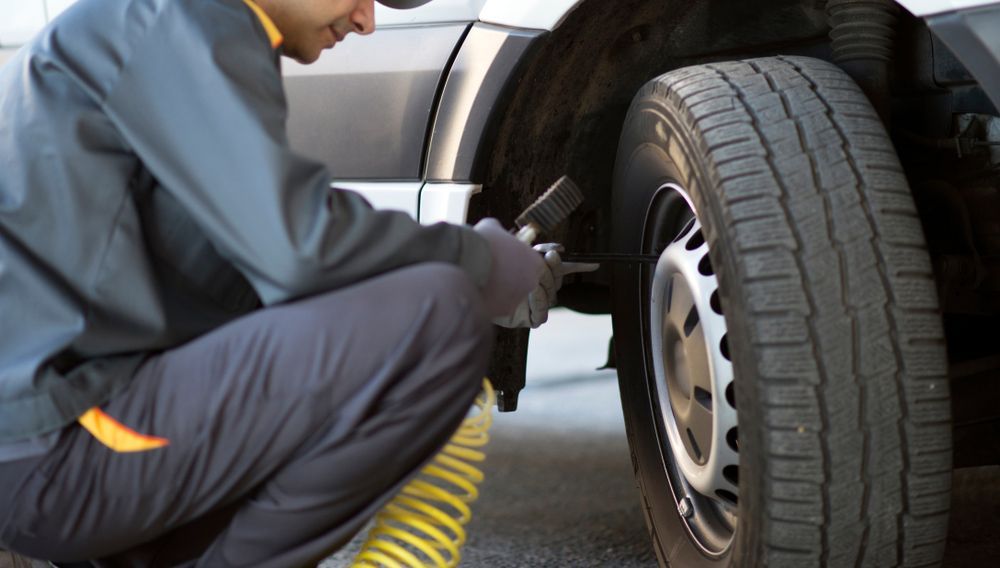
Two of the most common and preventable causes of premature tyre wear are incorrect tyre pressure and poor wheel alignment. Under-inflated tyres generate excess heat and wear the outer edges faster, while over-inflated tyres ride on a smaller contact patch and wear the centre tread more quickly. Both conditions compromise handling, increase the risk of a blowout and reduce fuel efficiency.
Wheel alignment has a similar effect. When wheels are not pointing in the right direction relative to each other and the road, tyres wear unevenly and far faster than they should. Alignment can be knocked out by hitting a pothole, mounting a kerb or general wear on suspension components over time.
Signs that pressure or alignment may be affecting your tyres include:
- Worn outer or centre edges while the rest of the tread looks intact
- The vehicle drifting left or right on a straight, level road
- A steering wheel that sits off-centre when driving straight
- Increased fuel consumption without an obvious mechanical cause
How to Check Tread Depth at Home
Tread depth is the most direct indicator of whether a tyre is still safe. In Australia, the legal minimum tread depth is 1.5mm across the full width of the tyre. Most new Darwin tyres start with around 8mm of tread, so by the time you reach 1.5mm, a significant amount of the tyre's working life has been used up.
A tread depth gauge from any automotive store gives you an accurate reading in seconds. Many tyres also have built-in wear indicators — small raised sections sitting in the grooves of the tread. When the surface wears down to the level of these indicators, replacement is overdue.
Tread depth directly affects:
- Wet weather grip, which diminishes rapidly below 3mm
- Braking distances, which increase significantly as tread wears
- The risk of aquaplaning on wet or flooded roads
- Your vehicle's ability to pass a roadworthy inspection
Understanding Tyre Age
A tyre can have adequate tread depth and still be unsafe if it is too old. Rubber hardens and becomes brittle over time, increasing the risk of cracking — particularly on the sidewalls. This kind of deterioration is not always obvious from a quick visual check, which is why age is a factor that often gets overlooked until a problem occurs.
Every tyre has a four-digit DOT code stamped on the sidewall that indicates its manufacture date. The first two digits represent the week and the last two the year of manufacture. A tyre stamped with 1823, for example, was made in the 18th week of 2023. Most tyre manufacturers recommend replacement at ten years from that date, regardless of how the tyre looks on the surface.
Age-related warning signs include:
- Small cracks or crazing on the sidewall or between tread blocks
- A hardened or discoloured rubber surface
- Tread that feels stiff rather than slightly pliable to the touch
- Bulges or deformations anywhere on the tyre
Warning Signs It Is Time to Replace Your Tyres
Beyond tread depth and age, there are clear signs that a tyre needs attention sooner rather than later. Some are visible on inspection, while others show up as changes in how the vehicle handles. Either way, they should not be ignored — a tyre that is compromised structurally can fail without much warning, particularly at highway speeds or in wet conditions.
Any of the following should prompt an immediate inspection:
- Visible bulges or blisters on the sidewall, indicating internal structural damage
- Cracks deep enough to expose the underlying cords or belts
- A persistent slow leak that requires regular top-ups
- Vibration or thumping at consistent speeds that cannot be explained by wheel balance
- Tread worn down to or below the built-in wear indicators
A tyre showing any of these signs should not be driven on until assessed by a qualified technician. In most cases, repair is not an option and replacement is the only safe course of action.
Can Regular Maintenance Extend Tyre Life?
Yes — and the difference is significant. Drivers who keep their tyres properly inflated, have their wheels aligned and balanced regularly, and rotate their tyres at the recommended intervals typically get considerably more life out of each set than those who do not. It is one of the more straightforward ways to reduce running costs on any vehicle.
Tyre rotation moves tyres between positions on the vehicle to even out wear patterns. Because front and rear tyres carry different loads and experience different stresses, rotation helps prevent any one tyre from wearing faster than the others. For front-wheel drive vehicles in particular, the front tyres take on significantly more work and will wear faster without regular rotation.
A practical maintenance routine includes:
- Checking tyre pressure monthly and before any long trip
- Having wheel alignment inspected every 10,000 to 15,000 kilometres or after any significant impact
- Rotating tyres every 8,000 to 10,000 kilometres
- Visually inspecting tyres for cuts, cracks or foreign objects on a regular basis
How New Tyres Improve Safety and Performance
Replacing worn tyres is not just about passing a roadworthy check — it has a real impact on how your vehicle performs every time you drive. New tyres deliver better grip in wet and dry conditions, shorter braking distances, more predictable cornering and improved fuel efficiency compared to tyres that are worn or degraded.
The difference is most noticeable in wet conditions, where tread depth directly affects how well the tyre channels water away from the contact patch. A worn tyre on a wet road significantly increases the risk of aquaplaning, where a film of water lifts the tyre off the surface and steering control is lost.
At
City Tyre Service we understand that Darwin's roads, heat and driving conditions place real demands on your tyres. From the intense UV exposure and high temperatures of the Top End to the corrugated outback roads many of our customers travel regularly, Darwin tyres face conditions that accelerate wear faster than in many other parts of the country. Whether you need a routine check or are searching for
tyres Darwin locals trust for an honest inspection, our team can measure tread depth, identify age-related deterioration and recommend the right replacement when the time comes.
Give us a call to book a tyre inspection today.